Sunday, 28 May 2006

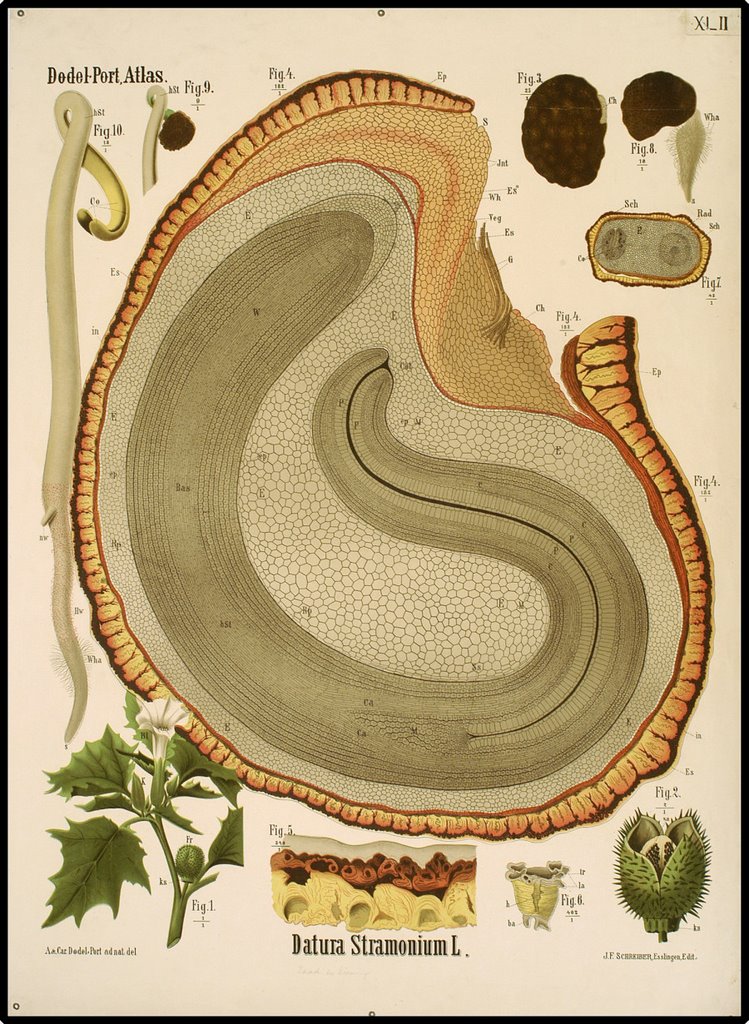
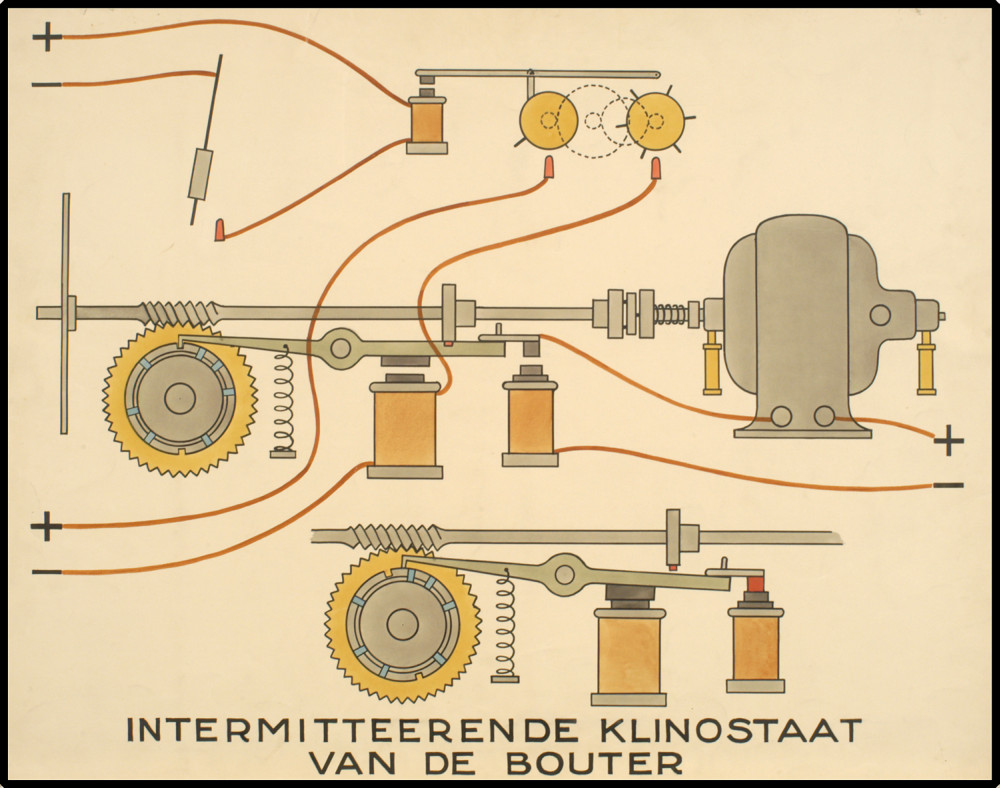
Dutch Botanical Wall Charts 1870-1960


From the Memory of the Netherlands comes 'The Art of Knowledge: Educational Botanical Wall Charts 1870-1960'.
"In the course of the last century and a half, large colour representations of plants and parts of plants were used to illustrate lectures on botany: the so-called educational wall charts. They give an impression of the knowledge, research and academical education in the field of botany in the Netherlands during the years 1870-1960.

Drawing on the huge collections of the Universities of Groningen, Amsterdam, Utrecht, Delft and Wageningen, totalling some 2,300 printed and handmade wall charts, a selection has been made for the Memory of the Netherlands."
There are hundreds in the database and all the initial pages are in english. ['groot'=Large.]

Saturday, 27 May 2006

Magpie Tidings

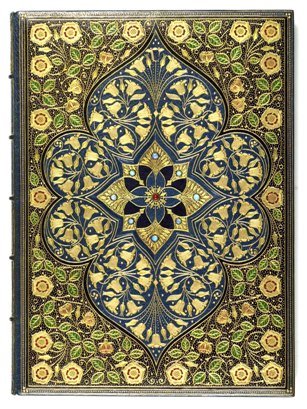
Binding on Alfred Lord Tennyson's The Lady of Shalott.
Manuscript on vellum, illuminated by Alberto Sangorski ~1912
I have mixed feelings about images of bindings and so don't post a lot of them. It's one area of bookcraft where seeing the work 'live' is a far superior experience in my opinion. But it is worthwhile looking through a recent exhibition from Southern Methodist University's Bridwell Library ('Highlights of the Exhibition: Six Centuries of Master BookBinding') because the images are augmented by excellent explanatory notes.


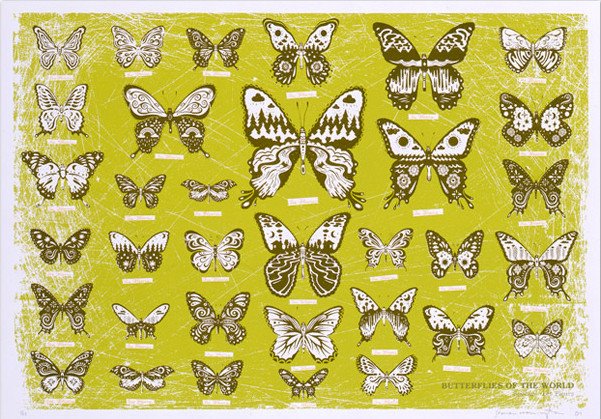
Illustrations © Steve Harrington [flash] - if you like his work, the website is a bit of a tease. Always leave the audience wanting more.


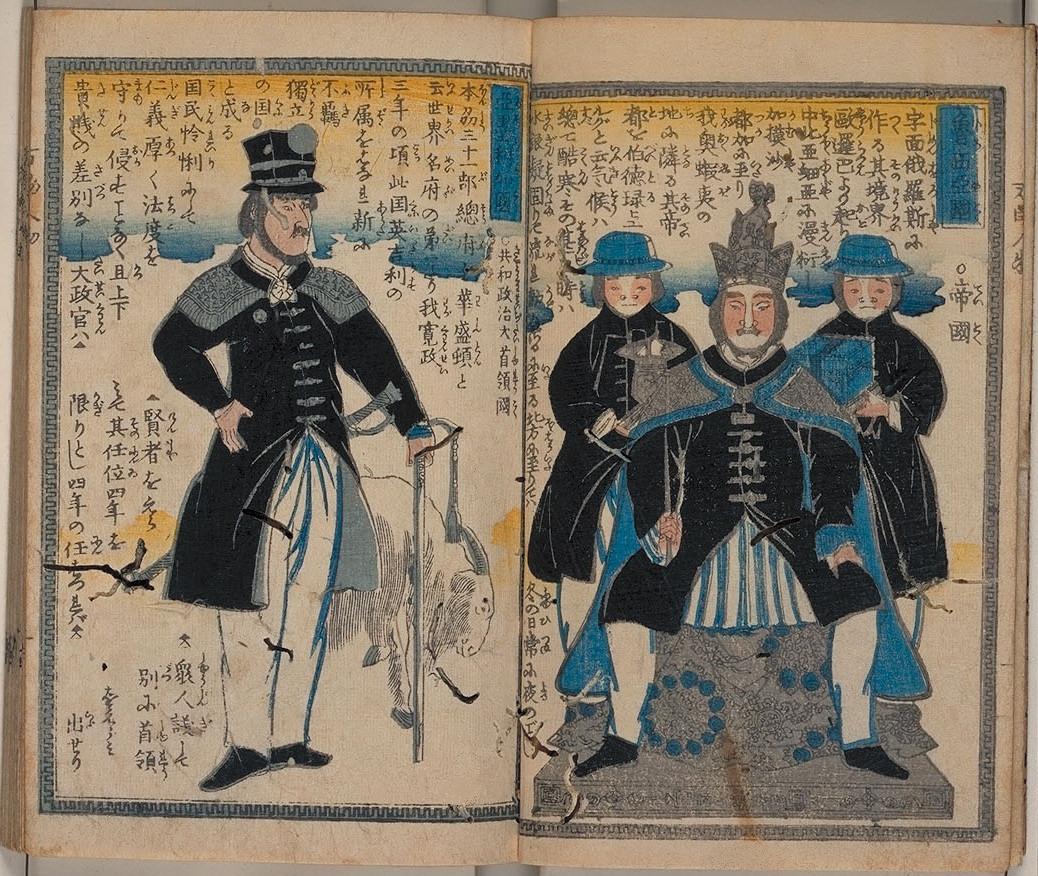
These images come from 2 fine volumes among the Sumida Maritime Materials Collection at Kobe University. (These slender books are both in the margin at that link) My guess would be the 2nd half of the 19th century. Click for much larger versions. [I've cleaned up the backgrounds somewhat]


Calleja by Manuel Picolo 1912

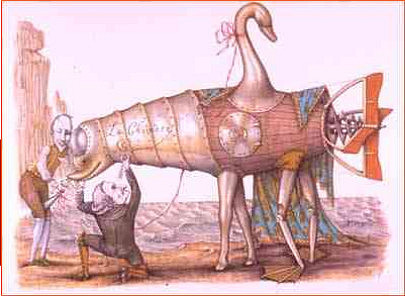
El Verdadero Inventor del Buque Submarino Francisco Meléndez

Click the word 'Exposición' to launch the flash browser: 'Cien Años de Ilustración Infantil Española' - 'One Hundred Years of Spanish Childrens Book Illustrations' at the Cervantes Digital Library. It's a bit of a shame that the images are only modestly sized and the digitization is lacklustre now and then, but this is a significant compilation nonetheless. Good for you if you read spanish.

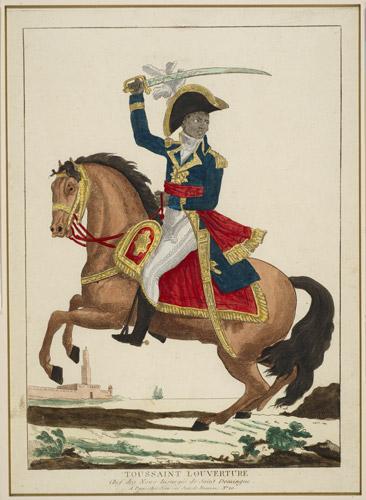
'Toussaint Louverture' was born into slavery in St Domingue (Haiti) and later acquired an education, was emancipated and led a revolution in the late 18th century. He appointed himself Governor for life in 1802.


Artifacts of the Taino people from the Venezuelan Arawak civilization who migrated to the Carribean. (from a 1776 Dominican Father's publication)

Both images are from 'Common Routes: St Domingue-Louisiana', a current exhibition from the Historic New Orleans Collection with a modest online selection of maps, paintings, documents and historical commentary.

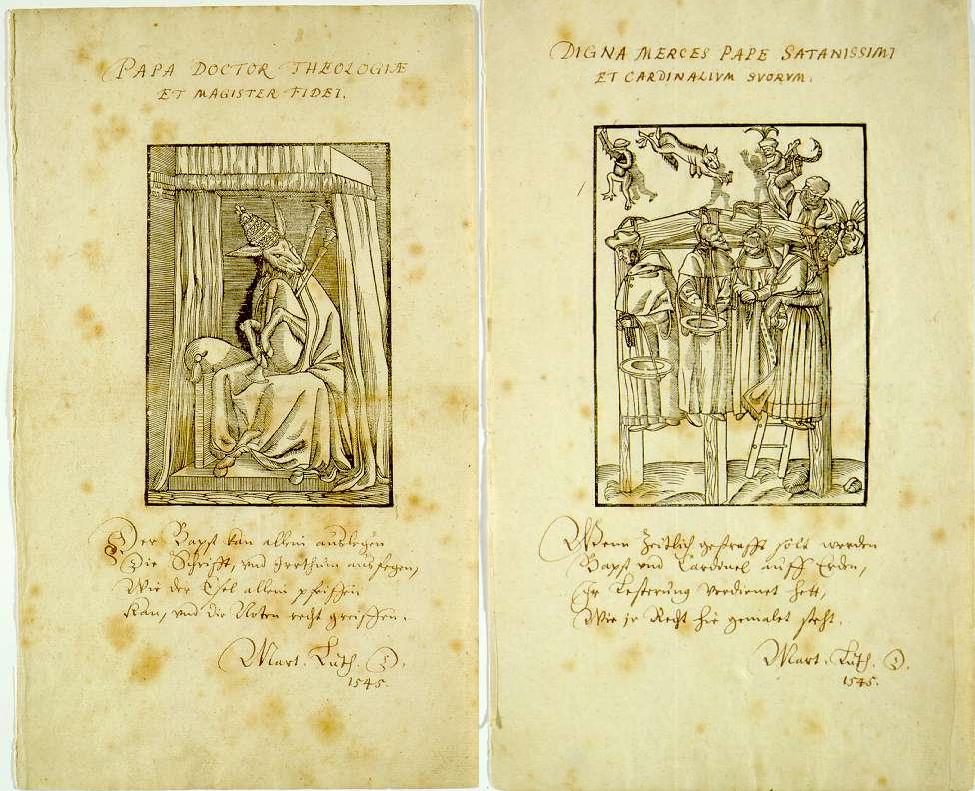
'The Pope -- doctor of theology and master of the belief' and 'The just rewards for the most diabolical Pope and his cardinals' in which The Pope is shown as a donkey with tiara and bagpipes, hanging on the gallows with his cardinals. The devils take possession of their souls.

These are the only 2 'satirical leaflets from the time of the reformation' but there are a few other interesting/odd images among the Graphic Collection at the German History Museum. [I pasted these leaflets together] Click the image for a full size version.


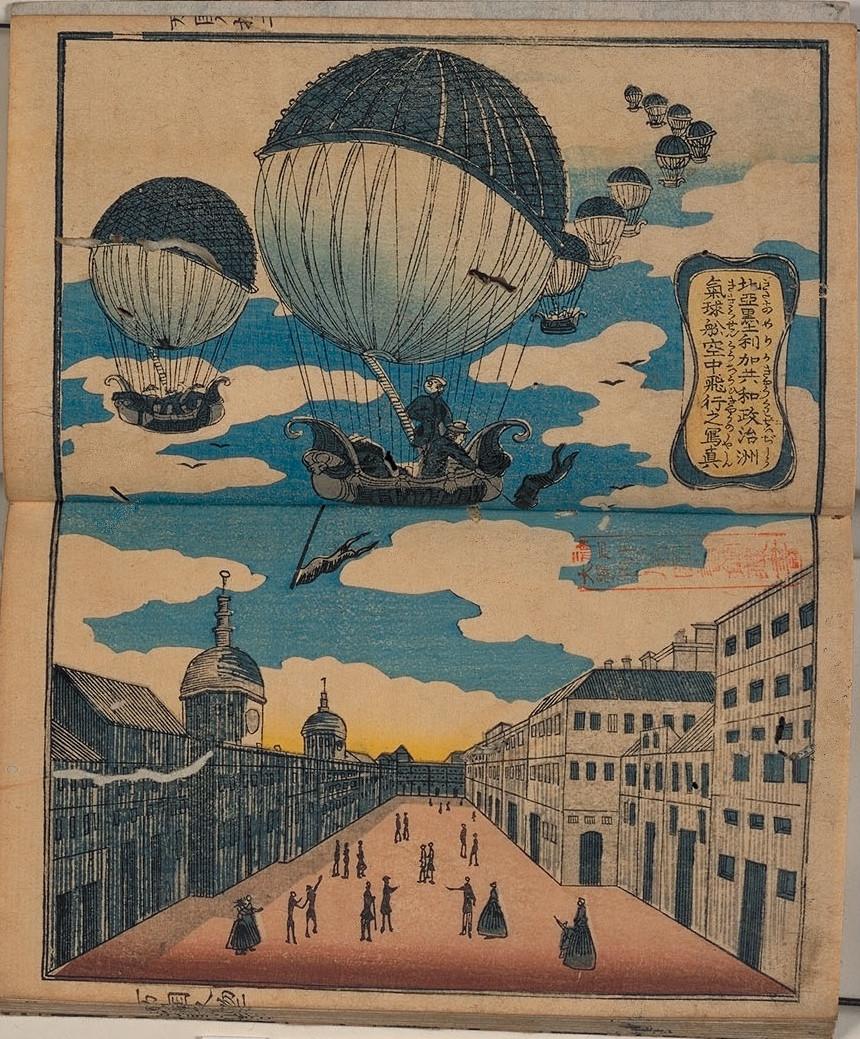
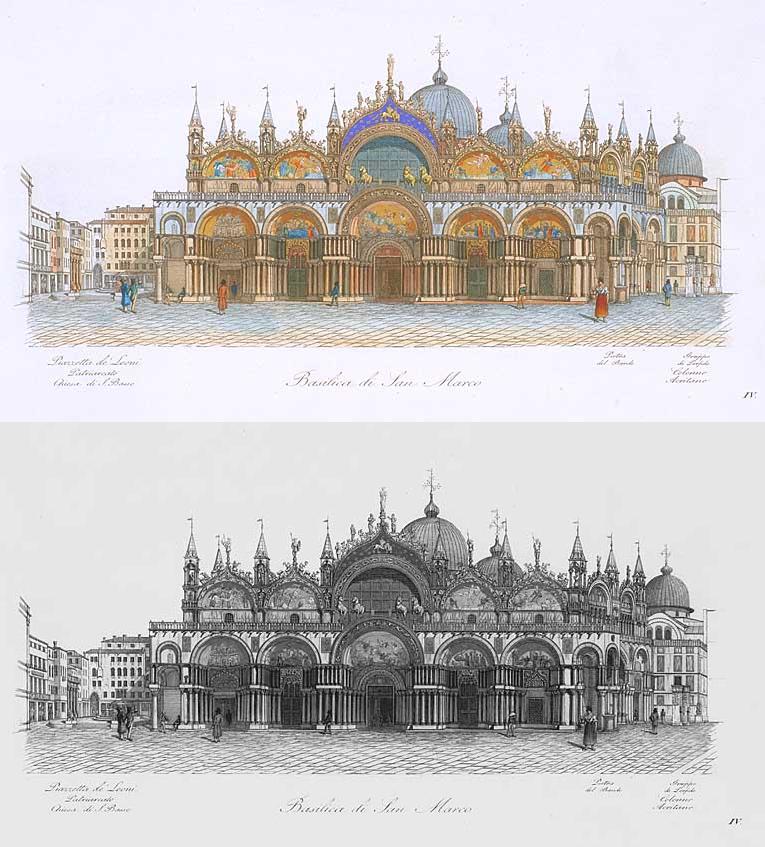
Kyoto University Library have a display in english of 16 illustrations in both colour and black and white from Antonio Quandra's 'La piazza di San Marco in Venezia' - 'St Mark's Square, Venice' (~1830) [I pasted the 2 images together]

Andy Warhol (!) illustrations from 'The Little Red Hen'
(in: 'The Best in Children's Books') - 1958 at GlyphJockey.

Friday, 26 May 2006

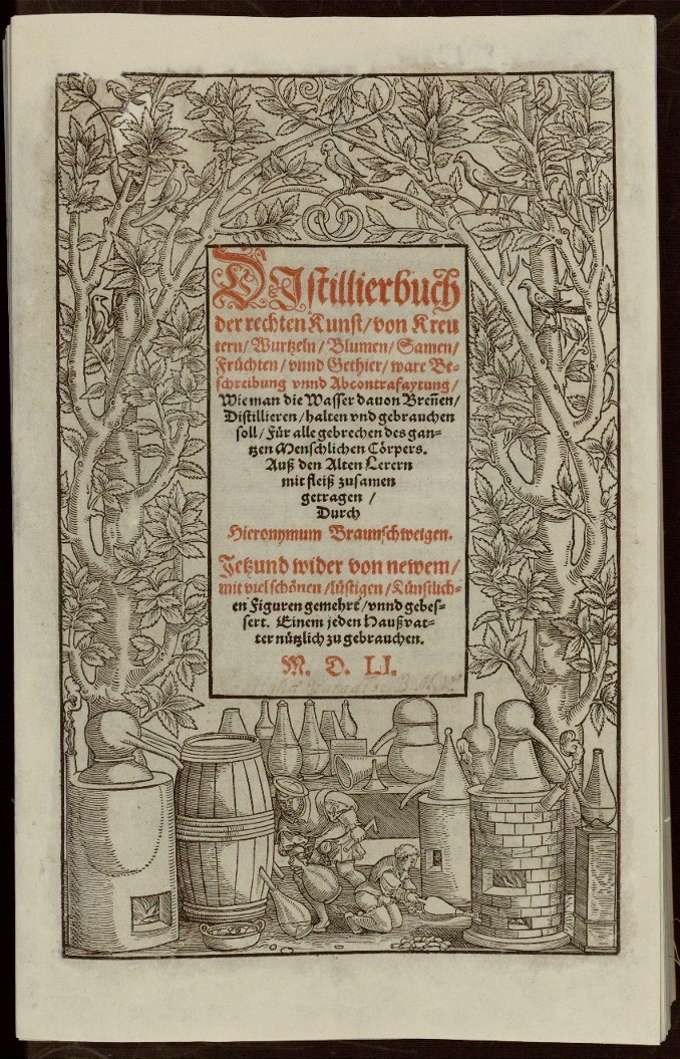
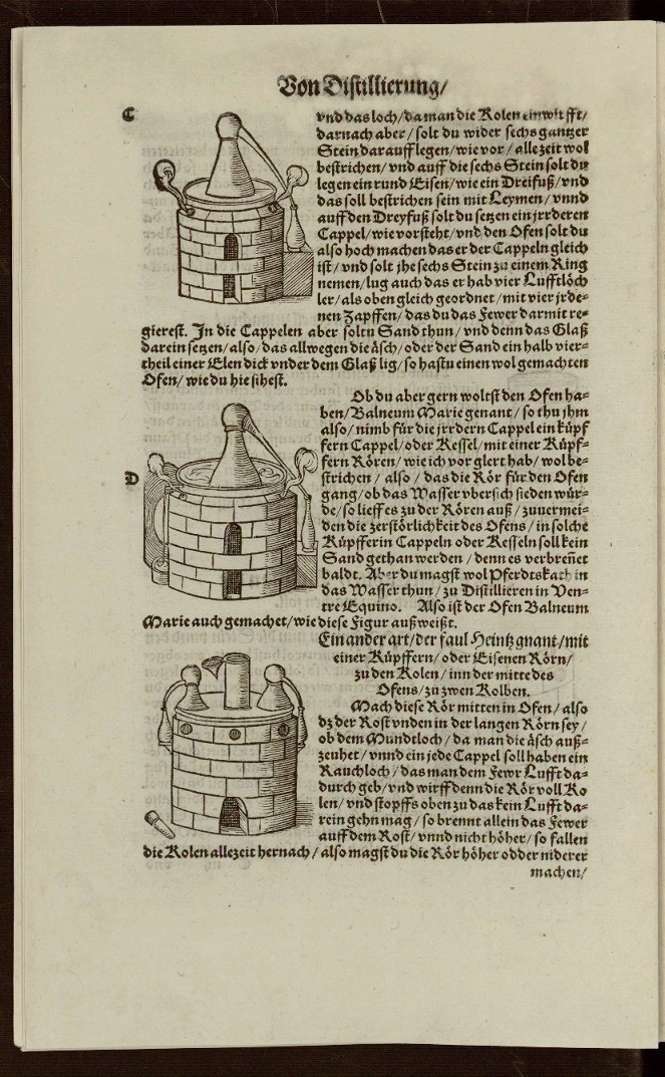
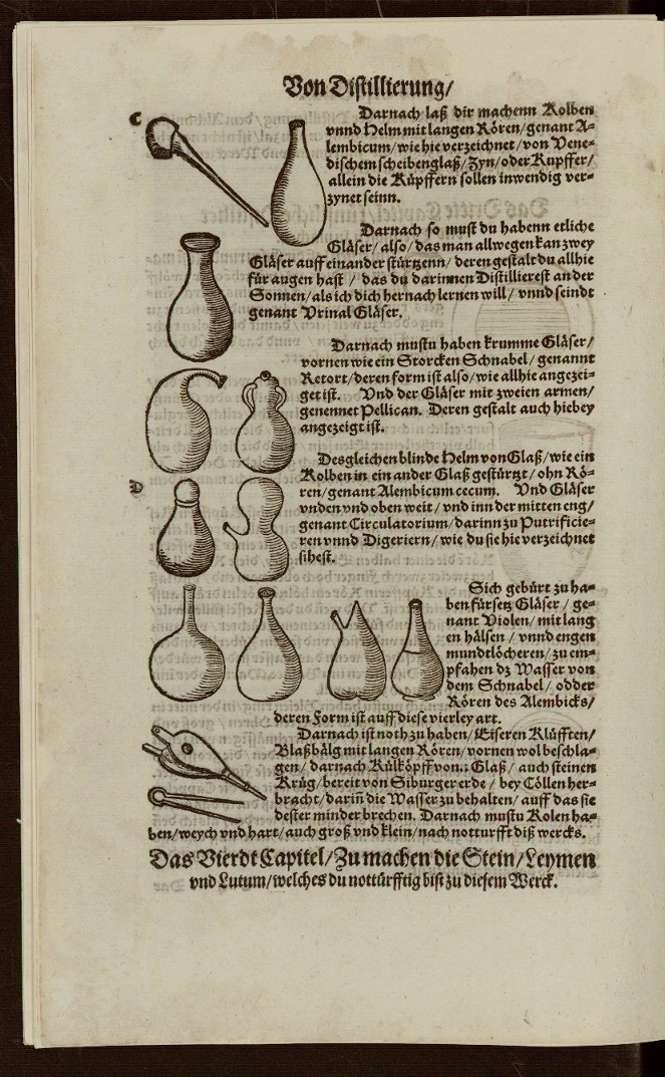
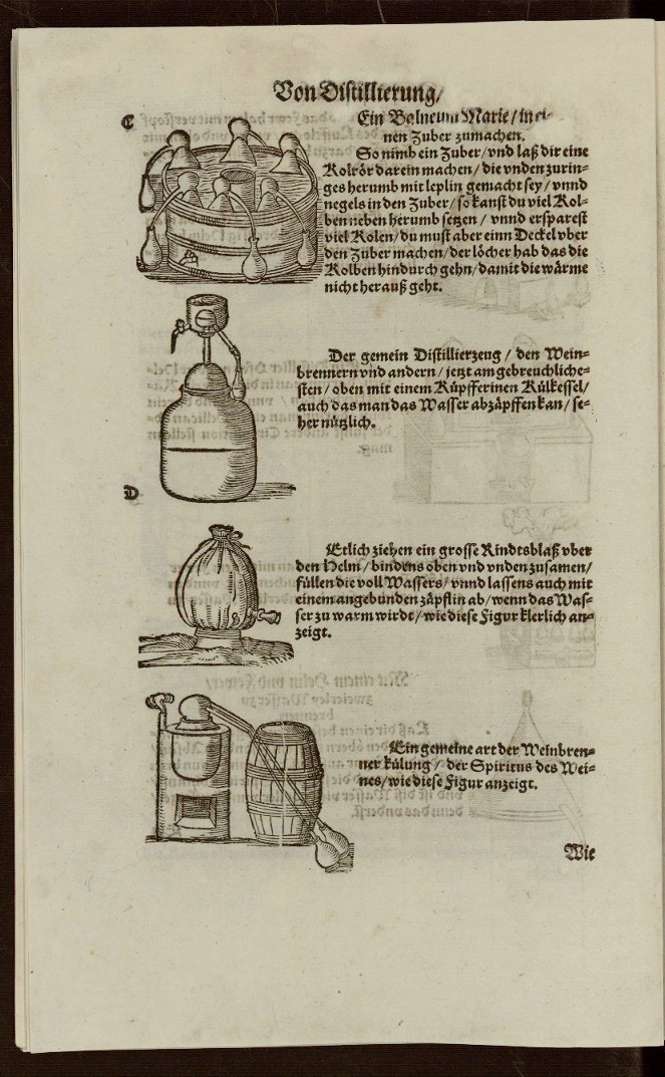
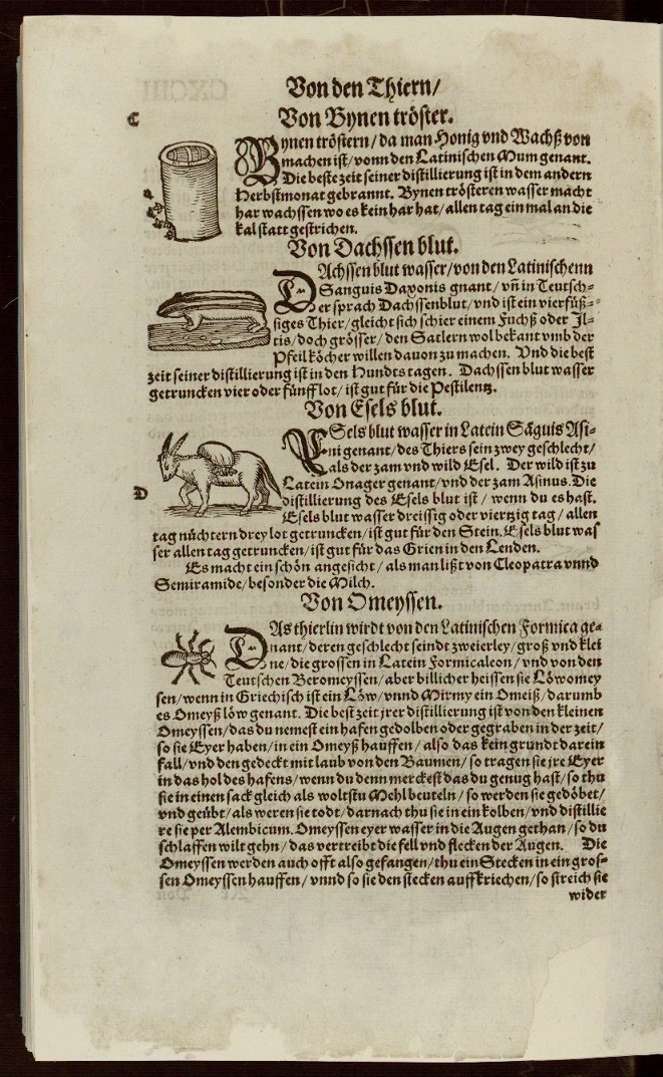
Distillerbuch


[All images were loaded full size - click for larger versions]

Hieronymous Braunschweig (~1450-1512) was from Strasbourg and was probably a surgeon. Beyond these 'facts' things are a bit vague.

Braunschweig produced a number of books on distillation and the above Distillerbuch from 1551 was an amalgamation of his earlier writings from ~1500. It is an interesting and important body of work. Distillerbuch belongs to a number of subject areas: alchemy, chemistry, botany and pharmacology; and tangentially, medicine. It is another of those pivotal works that marks the transition from the middle ages to modern science.

Braunschweig compiled all the known information about the processes of distillation from his age - the methods for plant extraction and purification, distilling by filtration, sunlight, in sand and water baths, at varying temperatures and even using ants (a bottle of good wine matured in an anthill for a year would provide a pleasant treatment for rheumatism: I believe there are many 'remedies' throughout the book). A figure of an ant can be seen above; more perplexing or worrying perhaps are the presence of goats, frogs and other critters. My german is non-existent, my middle or high german is even worse. That may be a good thing.

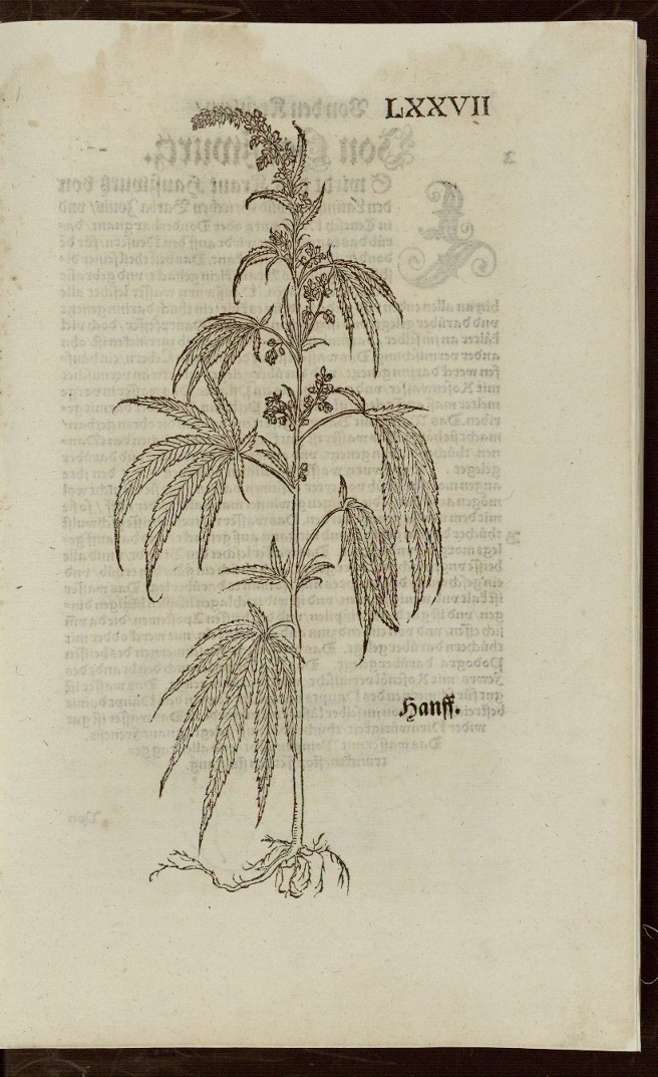
Beyond the fanciful madrigore image at the top, the other illustrations in this 433 page manuscript are relatively true to life. If there are 250 pictures in the book then more than 200 of them are of plants - including the flowering marijuana species (I think) above. Distillerbuch was apparently the leading recipe book for pharmaceutical and home distillation setups for a century or more.

There are other 'bits and pieces' of information on the web but nothing remarkable or with much air of authority. Play around with the surname spelling to search for more background - you may recall I mentioned 'Brunschwig' last week in relation to infectious diseases.

Thursday, 25 May 2006

British Geographical and Trignometrical Surveying History

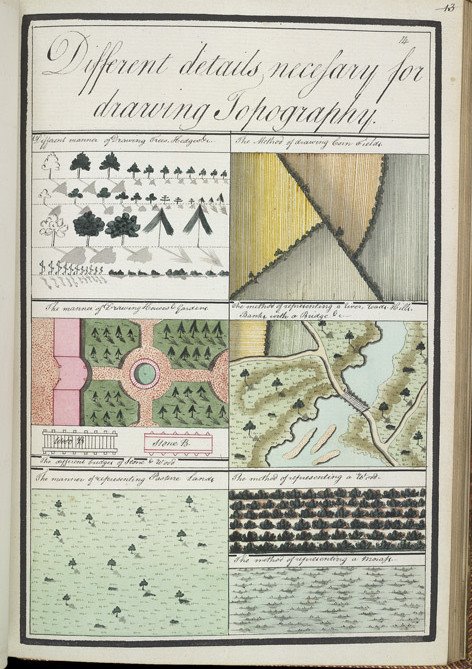
"In this page from his 'Book of Practical Geometry', Henry Fombelle sets out some of the "Different details necessary for drawing Topography". These military conventions for representing features of the landscape, originally derived from French models, were those adopted by the draughtsmen of the Ordnance Survey." [This is a surviving notebook from the Royal Military Academy ~1765]


"This view of Annan comes from a "topographical and military account of the state of the Marches", written around 1569. The town commanded an important defensive position on the estuary of the River Annan, overlooking the English territories across the shallow waters of the Solway Firth." [Robert the Bruce was an Earl of Annandale - this place was a traditional thorn in the side of England]
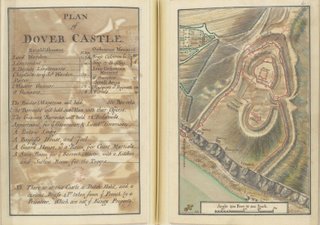

"A book of plans of fortifications gives a detailed picture of England's defences around the middle of the 18th century. This plan of Dover Castle was drawn in 1752.

The positions of the batteries of cannon on the castle ramparts and the cliff top are shown precisely. The canon labelled "long gun" in the middle of the cliff top was the castle's most impressive weapon: a brass culverin, 24 feet 2 inches long and capable of firing a shot weighing 12 pounds. Remaining artillery consisted of 21 cast-iron 6-pounders. There were 150 muskets with bayonets, 40 pistols and storage room for 330 barrels of gunpowder."

"The high standards achieved in drawing and cartography by the best of the gentlemen cadets can be illustrated by the work of one of the Royal Military Academy's most illustrious graduates: Lieutenant Archibald Campbell.

Campbell drew this east view of Fort Royal on Guadeloupe in the West Indies towards the end of the island's brief occupation by the British between 1759 and 1763. He was sent there as part of the invasion force during the course of the Seven Years' War against France. Several of Campbell's Guadeloupe views were engraved by Peter Mazell and published in London."

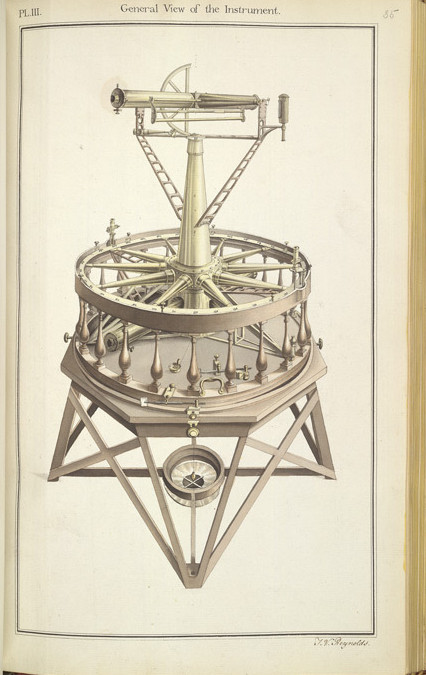
"Precision measurement of a baseline would be of little use in a trigonmetrical survey without an instrument capable of measuring the angles between it and distant points with comparable accuracy. The instrument designed to do this, a theodolite, is essentially a rotating telescope mounted on a circular scale.

The 'Great Theoldite' was eventually delivered to the Board of Ordnance in July of 1787. Three feet in diameter, it weighed 200 pounds and was transported in its own four-wheeled horse-drawn carriage. The magnificent brass and wood instrument is seen here in an illustration drawn by Lieutenant Thomas Vincent Reynolds for a presentation to the Royal Society by William Roy in 1790."

"These three views of the Royal Observatory in Paris were engraved in 1705 by Antoine Coquart. The lower night-time picture shows astronomers making observations of the moon and stars.

King Louis XIV established the observatory in 1667 with the express intention of making France as powerful in the world of science as she was in the theatre of war. The building was designed by Claude Perrault, who was also architect of the east wing of the Louvre Palace."

"Britain looked anxiously across the Channel, not for the first or the last time. By 1801, when James Gilray drew this political cartoon, Napoleon had taken command of the French army and begun the military campaigns he hoped would make him master of Europe. The cartoon shows the Secretary of War, William Windham, haunted by the nightmare of a French invasion with Napoleon leading a broken Britannia to the guillotine.

The threat was real: by 1804, Napoleon would have an army of 90,000 poised to cross the Channel. But England was prepared. Underpinning its defence strategy was the decision, finally taken in 1791, to map the whole of the country, beginning with the vulnerable south coast."


"Ordnance Survey maps were produced in four main stages. From their field notebooks, surveyors made a rough or 'foul' plan. This first draft was followed by an intermediate or 'proof' plan, which was carefully checked for accuracy.

A 'fair plan was then made at the reduced scale of one inch to the mile, sometimes with colouring. From this fair plan, a copper plate was engraved printing the finished map." [I pasted these images together of the four stages of map production for Wye, Kent]
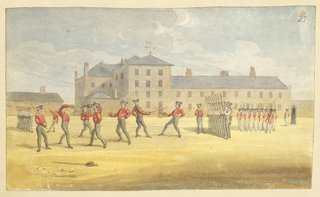

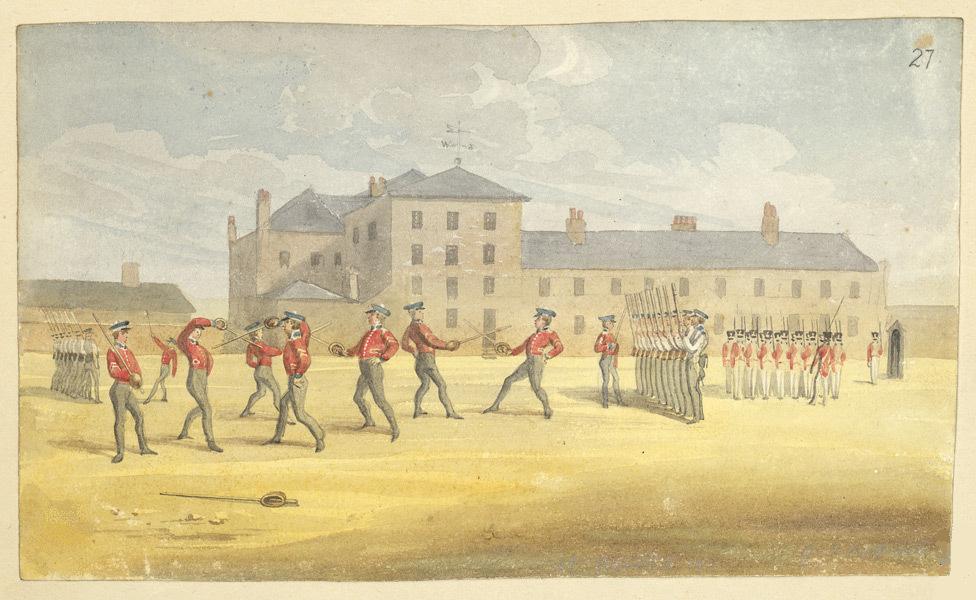
"Gentlemen cadets were the sons of the well-to-do and serving military officers. Most were aged between 14 and 19. Candidates for admission were required to pass a written examination covering a range of academic subjects.

Cadets faced an intensive six-days-a-week regime, centred on theoretical and practical military studies. This watercolour by George Scharf shows gentleman cadets at sword practice in the 1820s. Their training also included cultural and social skills. A French Master and a Drawing Master were appointed on the foundation of the academy...In these lessons, the drawing master was required to "teach the method of Sketching Ground, the taking of views, the Drawing of Civil Architecture, and the Practice of Perspective." "

[All the images {sans watermarks} were uploaded at full size - click for larger versions]

On the Trig is an extensive themed tour from the 'Collect Britain' section of the British Library.

With a large number of rare and eclectic book images, notebooks, prints and charts &c it presents 'the origin and early years of the Trigonometrical Survey of England and Wales'. This is a formidable and excellent site with copious explanatory notes and occasional flash tutorials on instruments and mapmaking. I went back through about 3 times to see everything. A+

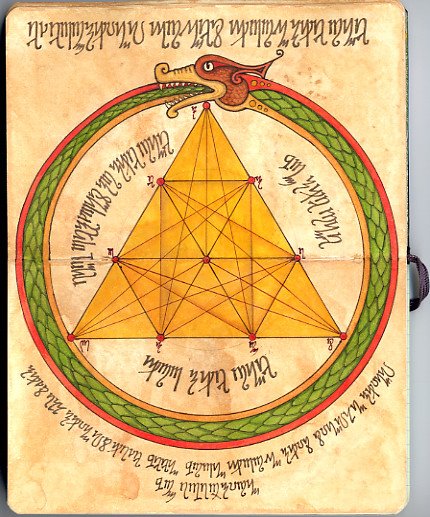
Moleskine Alchemy


Alchemy Notebook: liquid acrylic inks, Prismacolor watercolor pencils, and metallic acrylic paint in a Moleskine pocket sketchbook.
Images © www.ninthwavedesigns.com [via Monkeyfilter]

Wednesday, 24 May 2006

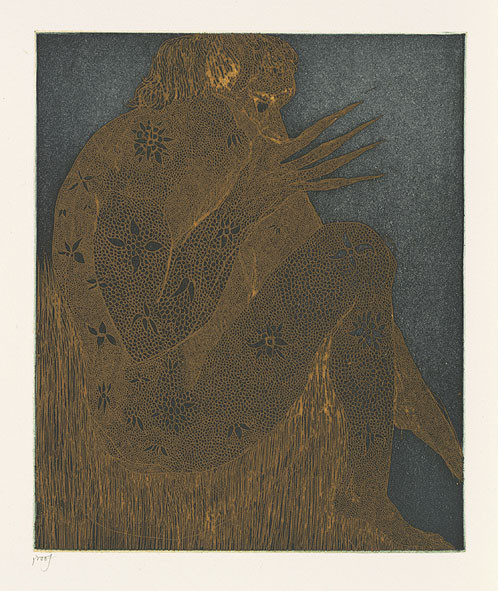
Leonard Baskin and the Gehenna Press

“People like me, who care about printing,
constitute the tiniest lunatic fringe in the nation.”

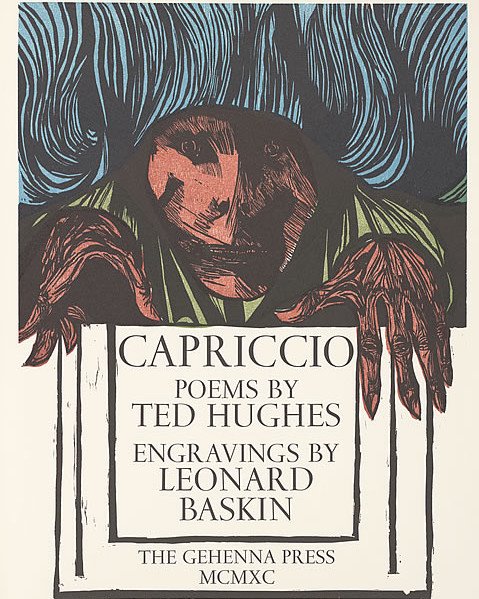
Published title page and letterpress.
Ted Hughes. Capriccio.
The Gehenna Press, 1990.

Leonard Baskin. Color etchings of Moise Brisquette.
from Jewish Artists of the Early and Late Renaissance
A Book of Etchings and Words. Gehenna Press, 1993.

'The enigmatic, humorous Jewish Artists of the Early & Late Renaissance, is written from the point of view of an imagined art historian, who acts as our guide through esoteric biographical details. This humorous work is in fact a fanciful pantheon of Jewish artists who might have flourished during the Renaissance, but didn’t.'

"Being Jewish confounds things. The people of the book are
intelligently defined as a religion. I, a believing atheist, proudly
declare my jewishness. It is to Yiddish that my spirit warms;
to that heritage of persecution and sensual denial, that Yiddish
so richly expresses. Not religion, but religious texts: not beliefs
or superstition, fear or malignant custom, but the literacy, artistic,
cultural and human relics of that religion."

Of the making of books there is no end.
Watercolor on heavy wove paper.
Illustration of Ecclesiastes 12:12.
[slightly cropped - screencap.]

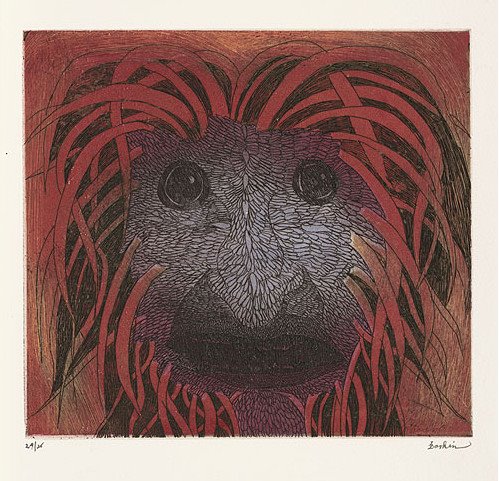
Richard Michelson. Masks: Poems.
Color etching by Leonard Baskin. The Gehenna Press, 1999.

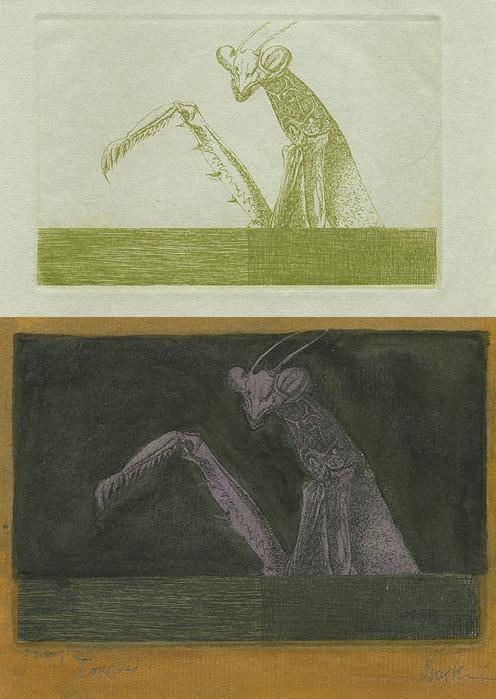
Leonard Baskin. Etching proof and touched etching proof from:
Diptera: a Book of Flies & Other Insects. The Gehenna Press, 1983.
[I pasted these 2 together]

Leonard Baskin. Bee Fly. Etching from:
Diptera: A Book of Flies & Other Insects. The Gehenna Press, 1983.

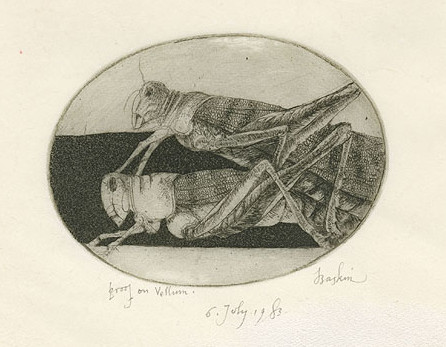
Leonard Baskin. Etching proof on vellum of grasshoppers mating from:
Diptera: A Book of Flies & Other Insects. The Gehenna Press, 1983.

Leonard Baskin. Artist’s proof.
Color etching for A Book of Demons.
[published 2001]

Leonard Baskin (1922-2000) was a graphic artist, sculptor, master printer, publisher and teacher and established the private printing house, Gehenna Press sometime between 1942 and 1953 (there are conflicting histories online). 'Gehenna' derives from a pun on Milton's Paradise Lost:
"And black Gehenna call'd, the type of Hell." (Gehenna is 'hell' in hebrew).

Baskin produced many of the prints for the more than 100 books that have been published in limited edition runs by Gehenna since it began. The above sampling seems a fair representation of the themes that run through Baskin's work: dark/nightmare images; natural history, people and more people and with a background and sometimes foreground vein from his Jewish heritage.

All the major art institutions and libraries of the world have works by Baskin who received countless awards for his books, prints and sculptures - which includes a bas relief (detail) for the FD Roosevelt Memorial and a bronze statue for the Michigan Holocaust Memorial. My understanding is that Gehenna Press is still operating in Massachusetts but they don't appear to have a devoted website.
[All images remain © the Estate of Leonard Baskin]