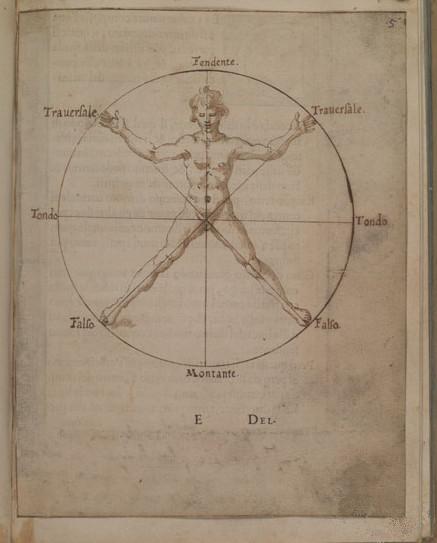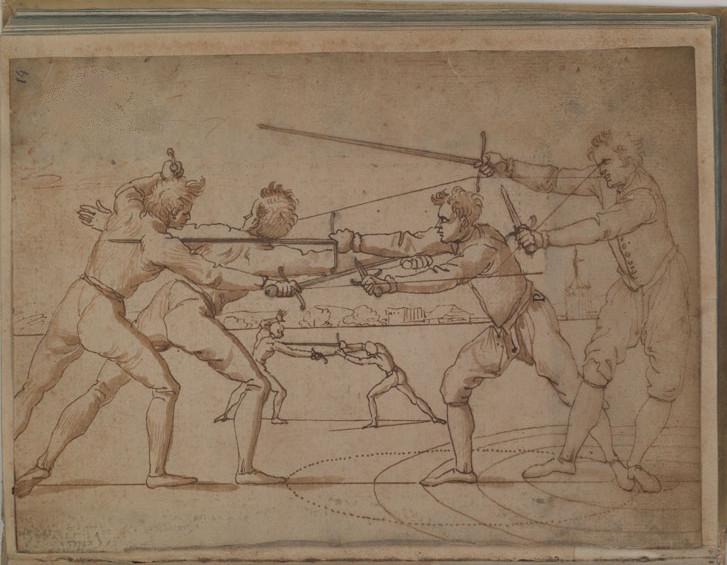
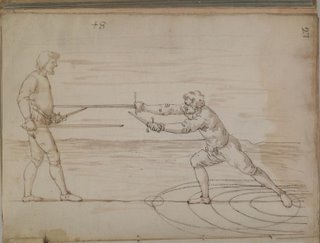
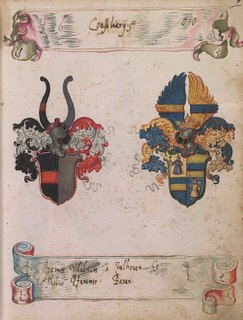
 Regole di Molti Cauagliereschi Esercitii
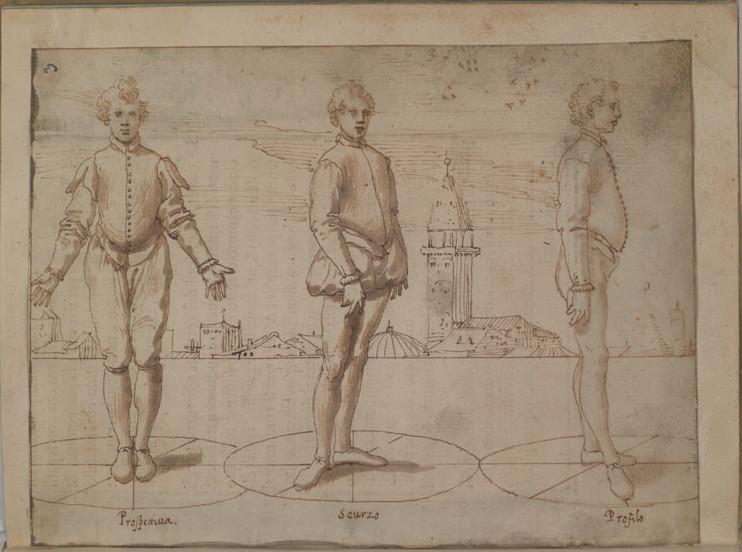
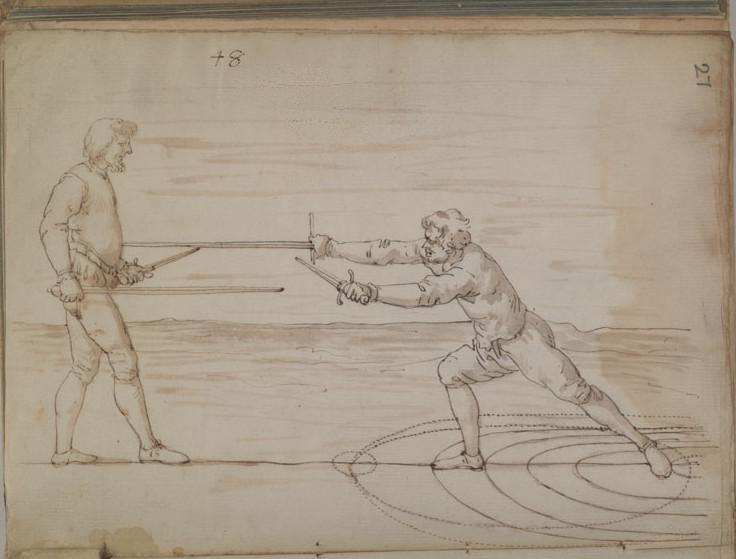
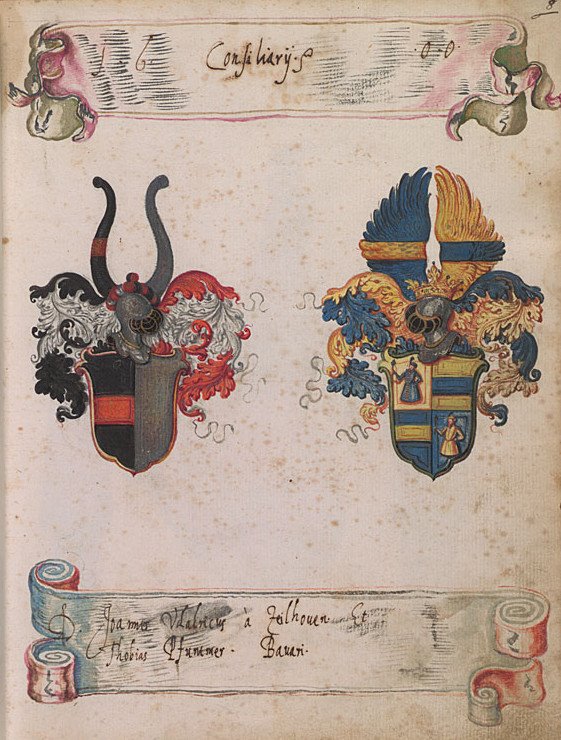
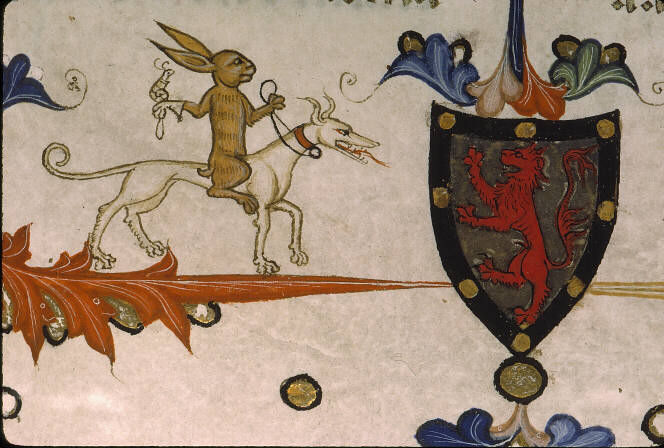
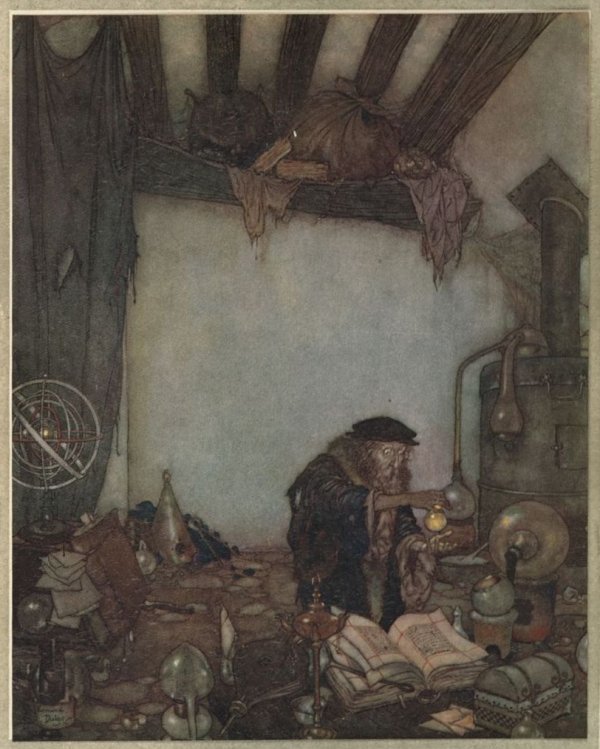
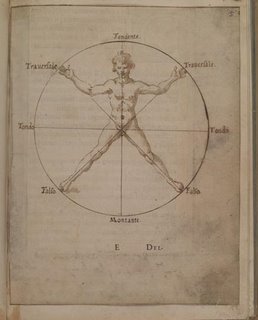
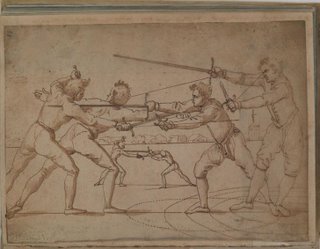
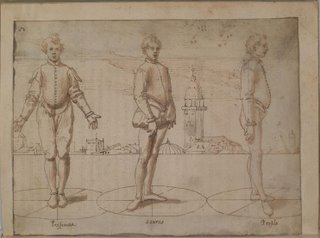
 by Federico Ghisliero was first published in 1587 and joined a long line of European fencing manuals. There is very little information directly about this work or its author online. I presume that the heraldic miniature painting above is a bookplate of sorts.
One interesting sidenote to the publication - it was printed with about 30 blank pages and it appears that all of the illustrations were added by hand later, copied from a master draft. Hence, no 2 copies would have been the same; for those in which the sketches were actually added. The book is about 190 pages long and divided into theory and practise.
[As much as library stamps and copyright notices make for interesting
accoutrements to a 450 year old text, I chose on this occasion to remove them.]
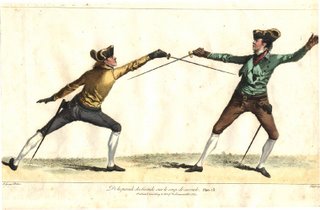
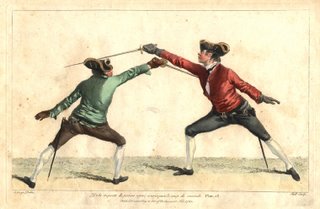
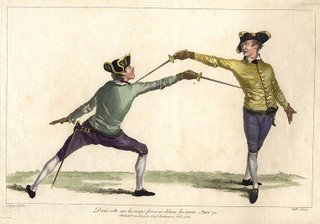
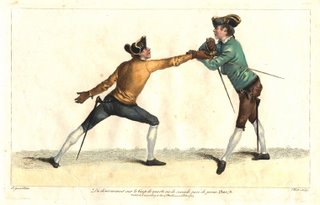
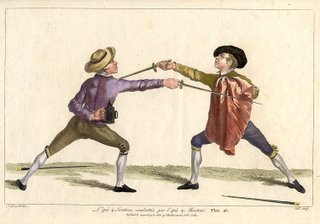
Domenico Angelo
(1717-1802) led something of an idyllic life. His wealthy merchant father supported his son's travels around their native Italy and Europe when Domenico was a young man.
During a 7 year stay in Paris, Angelo was privileged to receive training in horsemanship from Master equestrian: Monsieur de La Guerniere; learned dance from Gaetan Blathasar Vestris, the first dancer at the Paris Opera, and was instructed in fencing by the renowned Monsieur Teillagory. He also had an affair with the actress Peg Worthington who brought Angelo to England.
In England Angelo won some important fencing battles and established his School of Fencing, where the elite of British society gathered to learn swordsmanship and horse riding. The school was to remain in his family for generations and was still operating in the early 20th century.
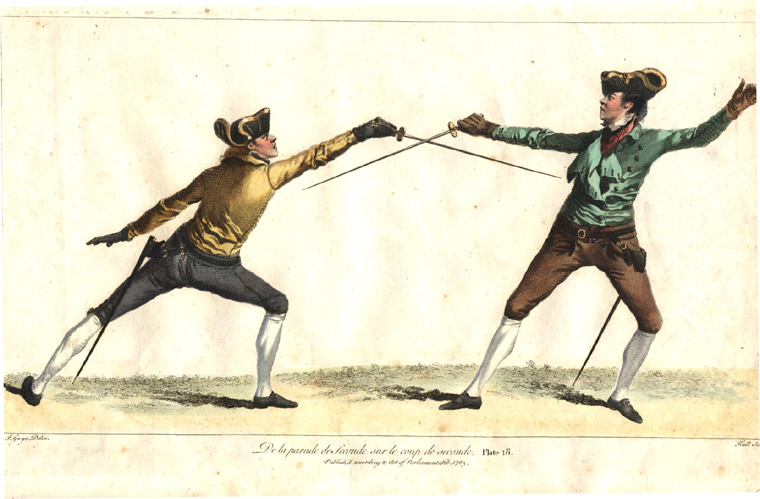
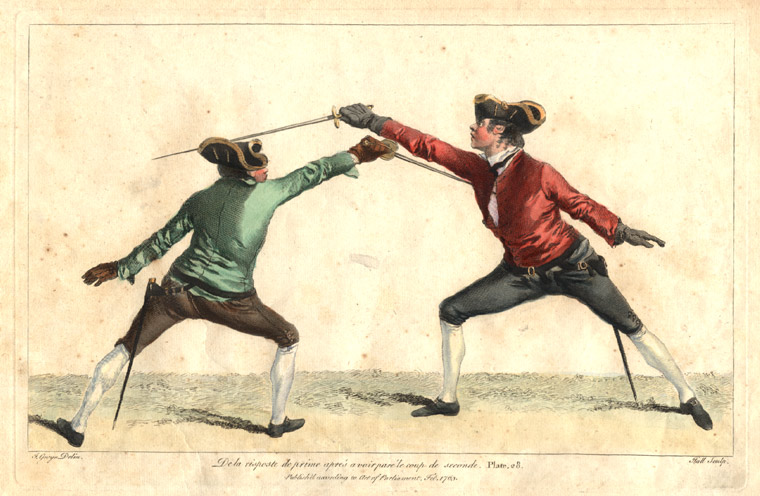
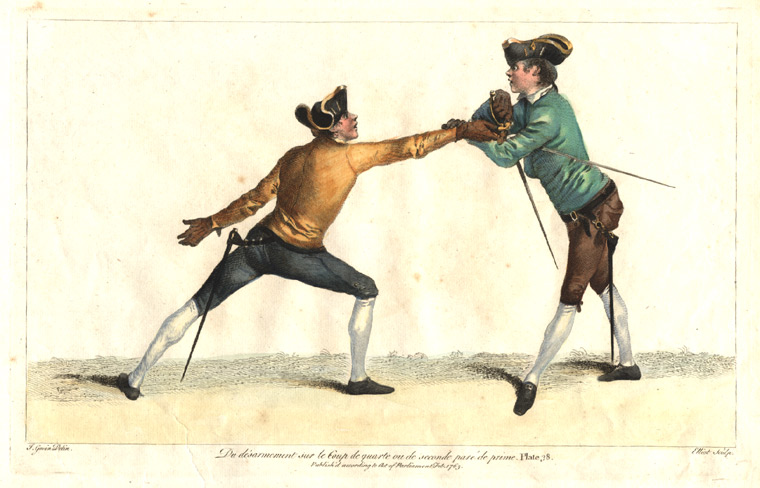
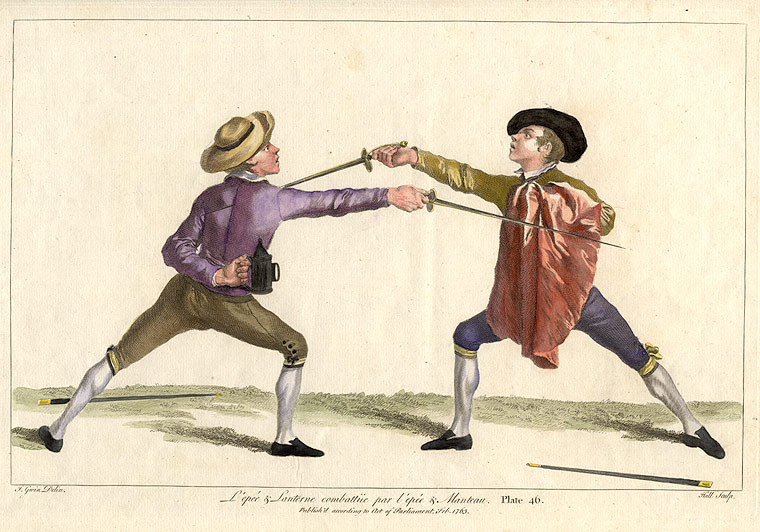
Britain may have been something of a backwater in fencing instruction but Angelo's publishing in 1763 of his
L'École des Armes, avec l'explication Générale des Principales Attitudes et Positions Concernant l'Escrime ('The school of fencing with a general explanation of the principal attitudes and positions peculiar to the art') was a watershed contribution in the history of fencing manuals. Diderot for instance published unedited sections and illustrations in his
Encyclopédie.
Previous tangentially related:
I,
II,
III.
(actually, there may be more semi-related posts --- another reason I need to go through the archives and post them all to del.icio.us. I guess the fact that I think about this more and more means that it is probably closer to being made manifest).